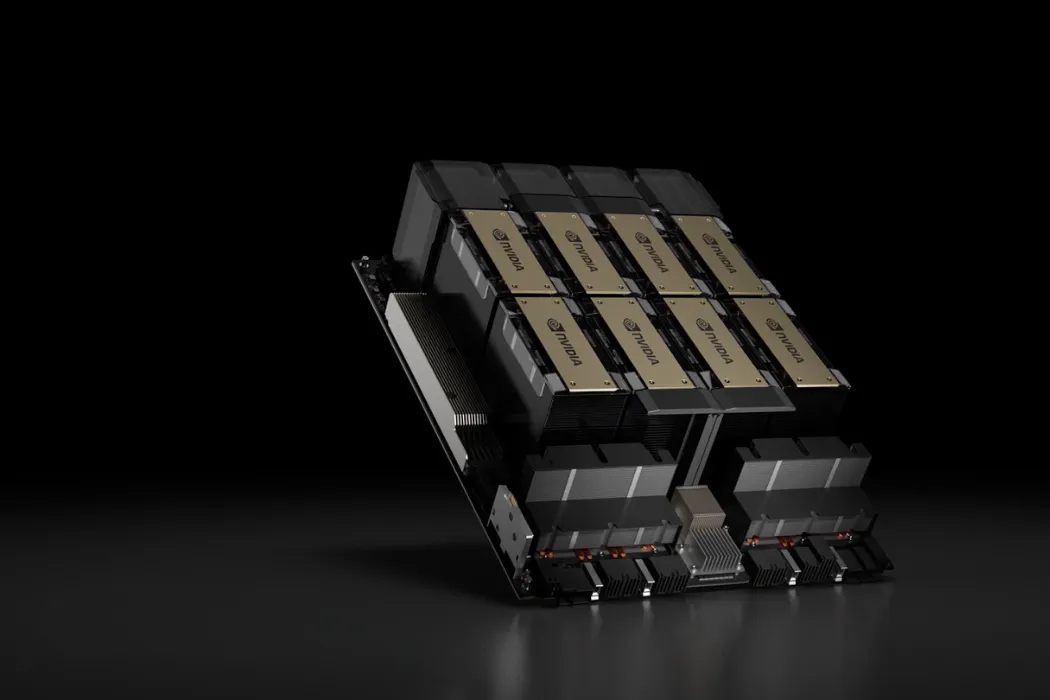
The NVIDIA H200 is a computational powerhouse, driving the AI revolution with unparalleled memory bandwidth and processing speed. However, this performance comes at a steep thermal cost. With a Thermal Design Power (TDP) exceeding 700W per GPU and rack power densities pushing past 50kW, traditional air cooling is no longer just inefficient—it is a critical performance bottleneck. To unlock the full potential of these high-density clusters, data centers must shift to a more effective thermal management paradigm.
Immersion oil cooling involves submerging the entire H200 server infrastructure in a thermally conductive, dielectric fluid. This method eliminates the thermal resistance of air, enabling Power Usage Effectiveness (PUE) ratings as low as 1.03, increasing rack density by up to 100%, and ensuring consistent peak clock speeds without the risk of thermal throttling.
This guide provides a comprehensive engineering analysis of deploying immersion cooling for HGX H200 clusters. We will examine the thermodynamics of single-phase oil, select the optimal dielectric fluids, define the necessary system architecture, and solve material compatibility challenges to build a future-proof, high-density AI data center.
Why is Air Cooling Obsolete for NVIDIA H200 Clusters?
The transition to the NVIDIA H200 marks the definitive end of the air-cooling era for high-performance computing. The thermal limit of traditional forced-air cooling is generally considered to be around 30-40 kW per rack. However, high-density H200 clusters can easily exceed 100 kW per rack, creating a thermal load that air is physically incapable of removing without incurring excessive noise, vibration, and unsustainable energy costs. Attempting to air-cool these systems results in immediate thermal throttling and a drastic reduction in computational efficiency.
The Thermodynamics of Failure: H200 Specifications
To understand why air fails, we must look at the raw thermal data of the hardware. The NVIDIA H200 is not just a chip; it is a thermal challenge that pushes the boundaries of physics:
- Extreme TDP: A single H200 (SXM5) GPU has a Thermal Design Power (TDP) of 700W, with peak transient loads often exceeding this. An 8-GPU HGX baseboard alone generates 5.6 kW of heat in a 4U or 6U chassis.
- High Junction Temperatures: To maintain peak boost clocks, the GPU junction temperature (Tj) must be kept well below its maximum limit (typically ~90°C to 95°C). Air cooling struggles to maintain this delta T at such high heat fluxes.
- Rack Density Explosion: A standard rack populated with H200 servers can reach power densities of 50 kW to 100 kW. Air requires a massive volumetric flow rate (CFM) to cool this, leading to impossible velocity requirements.
The Consequences of Clinging to Air
Continuing to use air cooling for H200 deployments leads to severe operational penalties:
- Parasitic Power Loss: To cool a 100kW rack with air, server fans must run at maximum RPM (10,000+). This parasitic load can consume 15% to 25% of the total data center power, significantly raising the PUE (Power Usage Effectiveness).
- Acoustic Vibration: High-speed fans generate noise levels exceeding 100 dBA. This acoustic energy causes micro-vibrations that can degrade Hard Disk Drive (HDD) performance and loosen connectors over time.
- Thermal Throttling: Air creates “hot spots” due to uneven flow distribution. When a GPU hits its thermal ceiling, it automatically throttles down, meaning you are paying for H200 performance but getting H100 (or lower) speeds.
| Specification | NVIDIA H200 (SXM5) Requirement | Air Cooling Limit | Result |
|---|---|---|---|
| TDP per GPU | 700 Watts | ~350-400 Watts (Efficiently) | Thermal Throttling |
| Rack Power Density | > 50 kW – 100 kW | ~30 kW – 40 kW | Requires Low Density Deployment (Wasted Space) |
| Delta T (Chip to Coolant) | Requires Low Thermal Resistance | High Resistance (Air is an insulator) | High Junction Temps |
| Fan Power Consumption | N/A (Fanless in Oil) | 20% of IT Load | High PUE (>1.5) |
What is Immersion Cooling? Single-Phase vs. Two-Phase
Immersion cooling is categorized into two distinct technologies: Single-Phase and Two-Phase. In Single-Phase Immersion, servers are submerged in a dielectric fluid (typically a hydrocarbon oil) that remains in a liquid state, removing heat via active pumped convection. In Two-Phase Immersion, a specialized engineered fluid boils directly on the component surface, utilizing the latent heat of vaporization to remove heat before condensing back into a liquid. While Two-Phase offers higher theoretical heat transfer rates, Single-Phase Oil is widely regarded as the superior choice for long-term operational stability and Total Cost of Ownership (TCO).
Single-Phase Immersion Cooling (The Industry Standard)
Single-phase systems use a dielectric fluid with a high boiling point (typically >150°C) so that it never changes state during operation. The fluid absorbs heat from the H200 GPUs and is circulated by a pump to a Coolant Distribution Unit (CDU) for heat rejection.
- Mechanism: Relies on forced convection. The pumps circulate the oil through the tank and server chassis.
- Heat Transfer Efficiency: Typical heat transfer coefficient (h) ranges from 1,200 to 1,500 W/m²K. While lower than boiling, this is sufficient to cool the 700W H200 GPU with a modest flow rate.
- Fluid Cost: Uses Hydrocarbon-based fluids (mineral oils or synthetic PAOs), which are cost-effective (approx. $5 – $15 per liter).
- Maintenance: Open-bath designs allow easy access. The fluid does not evaporate rapidly, making maintenance procedures like swapping a DIMM or GPU straightforward (“dip and wipe”).
Two-Phase Immersion Cooling (The High-Performance Niche)
Two-phase systems use fluorocarbon-based fluids engineered to boil at low temperatures (e.g., 50°C). The boiling process creates vapor bubbles on the chip surface, which rise to a condensing coil at the top of the sealed tank.
- Mechanism: Relies on nucleate boiling and phase change (Latent Heat of Vaporization).
- Heat Transfer Efficiency: Extremely high, with coefficients exceeding 10,000 W/m²K. This provides the lowest possible junction temperatures.
- Fluid Cost: Extremely expensive engineered fluids (e.g., Novec), often costing $150 – $300+ per liter.
- Environmental Risks: Many two-phase fluids are classified as PFAS (“forever chemicals”), facing impending regulatory bans in the EU and US.
- Operational Risk: The tank must be hermetically sealed. Even a micro-leak results in the rapid loss of thousands of dollars of fluid as vapor escapes.
Engineering Insight: For most hyperscale deployments, Walmate Thermal recommends Single-Phase Oil. While Two-Phase offers slightly better thermal metrics, the astronomical fluid cost, high maintenance complexity (hermetic sealing), and regulatory uncertainty regarding PFAS make it a risky investment for a 10-year data center lifecycle. Single-phase systems are robust, sustainable, and provide more than enough cooling capacity (up to 200 kW+ per tank) for current and future H200 clusters.
| Feature | Single-Phase (Oil) | Two-Phase (Engineered Fluid) |
|---|---|---|
| Heat Transfer Coefficient | ~1,200 – 1,500 W/m²K | > 10,000 W/m²K |
| Fluid Cost (Approx.) | Low ($5 – $15 / L) | Very High ($150 – $300+ / L) |
| Maintenance Complexity | Low (Open access) | High (Requires sealed vessel) |
| Fluid Loss Risk | Negligible (Non-volatile) | High (Rapid evaporation if seal breaks) |
| PUE Potential | 1.03 – 1.05 | 1.02 – 1.03 |
| Regulatory Status | Safe, Biodegradable options | Risk of PFAS bans |
Selecting the Right Dielectric Fluid (The “Oil”)
The dielectric fluid is the lifeblood of an immersion system. It acts as both the coolant and the electrical insulator. For high-density H200 clusters, the fluid must meet stringent requirements: a dielectric strength exceeding 40 kV to prevent short circuits, high thermal conductivity to transport the 700W heat load per GPU, and rigorous material compatibility. While refined mineral oils are common, modern data centers are shifting toward synthetic PAO (Polyalphaolefin) oils for their superior oxidation stability and consistent viscosity over a 10+ year lifespan.
Key Properties: The Physics of the Fluid
Selecting a fluid isn’t just about price; it’s about fluid dynamics and safety specifications:
- Viscosity (cSt): This determines how hard the pump has to work. Lower is better for heat transfer. Ideal fluids have a kinematic viscosity of < 10 cSt at 40°C. High viscosity fluids create stagnant boundary layers on the GPU die, increasing junction temperatures.
- Flash Point & Fire Safety: The fluid must not be flammable under normal operating conditions. A flash point > 150°C is the standard safety margin, well above the server’s operating temperature of ~50-60°C.
- Pour Point: Critical for cold starts. The fluid must remain liquid at low temperatures, ideally < -40°C, to ensure pumps can circulate fluid immediately after a facility power outage in winter.
The Hidden Risk: Material Compatibility
The most common failure mode in early immersion deployments wasn’t thermal; it was chemical. Hydrocarbon oils can act as solvents.
- Cable Hardening: Oils can leach plasticizers out of standard PVC cable insulation, making them brittle and prone to cracking. Immersion-ready cables (e.g., Teflon/PTFE) are mandatory.
- TIM Washout: Standard thermal pastes can dissolve or “pump out” into the oil, contaminating the fluid and leaving the GPU die with poor thermal contact. Indium foil or specialized immersion-grade TIMs are required.
| Property | Synthetic PAO | Refined Mineral Oil | Standard Transformer Oil | Ideal Target for H200 |
|---|---|---|---|---|
| Dielectric Strength | > 50 kV | > 40 kV | > 30 kV | > 45 kV |
| Viscosity @ 40°C | 6 – 8 cSt | 10 – 15 cSt | > 20 cSt (Too thick) | < 10 cSt |
| Flash Point | > 160°C | > 140°C | ~ 135°C | > 150°C |
| Relative Cost | $$ | $ | $ | Balance Performance/Cost |
System Architecture: Tanks, CDUs, and Manifolds
Deploying immersion cooling is not as simple as filling a tub with oil. It requires a sophisticated, closed-loop hydraulic architecture designed to move massive amounts of thermal energy with precision. A complete immersion ecosystem for NVIDIA H200 clusters consists of three mission-critical subsystems: the Immersion Tank (the primary vessel), the Coolant Distribution Unit (CDU) (the thermal management engine), and the Heat Rejection System (dry coolers or chillers). Each component must be engineered to handle the specific flow dynamics and material compatibility requirements of dielectric fluids.
A complete immersion cooling system for NVIDIA H200 clusters relies on three integrated subsystems working in harmony. First, the Immersion Tank houses the server hardware, serving as the primary heat capture vessel. Second, the Coolant Distribution Unit (CDU) acts as the system’s heart, managing fluid flow, filtration, and temperature regulation via a liquid-to-liquid heat exchanger. Finally, an external Dry Cooler or Chiller rejects the captured heat to the atmosphere, completing the thermal loop.
The Immersion Tank: More Than Just a Container
The tank is the interface between the IT hardware and the fluid. For high-density H200 racks, the tank design must solve several mechanical challenges:
- Material Construction: Tanks are typically fabricated from Stainless Steel (304 or 316) to ensure zero interaction with the dielectric fluid and to provide structural rigidity for the heavy fluid load (often >1,000 kg of oil per tank).
- Cable Management & Wicking: Oil can travel up cables via capillary action (“wicking”). Tanks must feature specialized cable trays and seals to prevent oil from dripping onto the floor or reaching non-immersion zones.
- Busbar Power Delivery: Delivering 100 kW of power to a tank requires rigid busbars rather than standard cables. These busbars must be compatible with the dielectric fluid and designed to minimize voltage drop.
The CDU: The Heart of the System
The Coolant Distribution Unit (CDU) creates the secondary loop, isolating the expensive dielectric fluid in the tank from the facility water loop. It is responsible for flow rate control, filtration, and temperature stability.
- Heat Exchangers: This is the core component. High-efficiency Brazed Plate Heat Exchangers (BPHE) are used to transfer heat from the oil to the facility water. Walmate Thermal specializes in manufacturing these critical components, optimizing plate geometry to handle the higher viscosity of oil compared to water.
- Redundancy Strategy: Reliability is non-negotiable. CDUs for H200 clusters typically employ an N+1 pump configuration. If one pump fails, the backup immediately takes over to prevent thermal runaway, which can occur in < 30 seconds at these power densities.
- Filtration: The CDU must continuously filter the oil to remove particulate matter (debris, solder flux) that could bridge contacts. A filtration rating of < 10 microns is standard to protect sensitive GPU components.
Manifolds and Flow Distribution
Simply pumping oil into the tank is insufficient. The flow must be directed precisely to the hot components. This is achieved through custom-engineered manifolds.
- Flow Velocity Requirements: To cool a 700W GPU effectively with single-phase oil, a localized flow rate of approximately 10-15 Liters per Minute (LPM) per node is often required.
- Uniformity: The manifold design must ensure equal pressure drop across all server slots. Poor manifold design leads to “starvation” of the servers at the far end of the tank, causing them to overheat while others remain cool.
- Walmate’s Expertise: We design and manufacture custom stainless steel fluid distribution manifolds using CFD simulation to guarantee uniform velocity profiles across the entire tank volume.
| Component | Key Function | Critical Specification (Data) |
|---|---|---|
| Immersion Tank | Houses IT equipment & fluid | Capacity: 42U – 52U; Power: 100 kW+ |
| CDU (Heat Exchanger) | Transfers heat to facility water | Approach Temp: 3°C – 5°C; Type: Brazed Plate |
| Circulation Pumps | Moves dielectric fluid | Flow Rate: > 300 LPM (per 100kW tank); Redundancy: N+1 |
| Filtration System | Removes particulates | Rating: 5 – 10 Microns; Replaceable while running |
| Dry Cooler | Rejects heat to atmosphere | Return Water Temp: 35°C – 45°C (Allows free cooling) |
The ROI of Immersion: PUE, Density, and TCO
Transitioning to immersion cooling requires a higher initial capital expenditure (CapEx) for tanks and fluid, but the Return on Investment (ROI) is rapid and substantial. The financial case for immersion is built on three pillars: drastic reductions in energy consumption (OpEx), massive increases in compute density (saving real estate), and extended hardware lifespan. For a high-density NVIDIA H200 cluster, immersion cooling is often the only way to achieve a sustainable Total Cost of Ownership (TCO).
Immersion cooling drastically reduces OpEx by attacking the root causes of data center inefficiency. By eliminating server fans and power-hungry CRAC units, it lowers total energy consumption by 30-50%, enabling Power Usage Effectiveness (PUE) ratings as low as 1.03 compared to the 1.5+ typical of air-cooled facilities. Additionally, it allows hardware density to increase by 2-3x, saving expensive floor space and construction costs.
Breakdown of Energy Savings
The energy savings come from removing two massive parasitic loads:
- Server Fans Elimination: In an air-cooled H200 server, fans can consume 15-20% of the total IT power to push air through dense heatsinks. In immersion, fans are removed entirely. This instantly reduces the IT load by up to 20% for the same compute output.
- Compressor-Free Cooling: Air cooling requires chillers to produce cold air (often 15-20°C). Immersion oil operates at higher temperatures (40-50°C), which allows for free cooling using only outdoor dry coolers in almost any climate, eliminating the need for energy-intensive mechanical refrigeration (compressors).
Hardware Lifespan and Reliability
Immersion doesn’t just cool hardware; it protects it. This extends the Mean Time Between Failures (MTBF):
- Thermal Stability: The high thermal mass of oil eliminates rapid temperature spikes (thermal cycling) that cause solder joint fatigue.
- Contaminant Protection: Submerged components are immune to dust, moisture, sulfur, and oxidation, which are common killers of air-cooled electronics.
- Vibration Elimination: Without high-speed fans, acoustic vibration is eliminated, protecting HDD arrays and connectors.
| Metric | Legacy Air Cooling | Immersion Oil Cooling | Savings/Gain |
|---|---|---|---|
| PUE (Power Usage Effectiveness) | 1.4 – 1.6 | 1.03 – 1.05 | ~30% Lower Total Power |
| Rack Power Density (kW) | 15 – 30 kW | 100 kW – 200 kW+ | 3x – 6x Density |
| Server Fan Power | 15% – 20% of IT Load | 0% (Removed) | Immediate Efficiency Gain |
| Failure Rate (MTBF) | Baseline | Extended (Stable Temp) | Lower Maintenance Cost |
| Floor Space Required | High (Hot/Cold Aisles) | Low (Compact Tanks) | ~60% Space Savings |
Design & Implementation Challenges (And Solutions)
Implementing immersion cooling for H200 clusters requires overcoming specific engineering hurdles beyond just thermodynamics. The transition introduces unique physical challenges: Material Compatibility issues where hydrocarbons can strip plasticizers from cables; Cable Wicking, where oil travels up wire insulation via capillary action to non-immersion zones; and Serviceability constraints that demand new protocols for handling oily hardware. Successfully mitigating these risks involves precise material selection, such as using PTFE cabling and Indium foil TIMs, alongside robust facility design.
Material Compatibility: The Silent Killer
Standard server components are designed for air, not oil. Long-term exposure to hydrocarbon fluids can cause chemical degradation in specific materials, leading to system failure.
- Cabling Insulation: Standard PVC (Polyvinyl Chloride) cables contain plasticizers that can leach into the oil over time. This makes the cables brittle and prone to cracking while contaminating the dielectric fluid. Solution: All submerged cabling must be replaced with PTFE (Teflon) or FEP insulation, which is chemically inert in oil.
- Gaskets and Seals: Common rubber seals like EPDM can swell or dissolve. Solution: Use Viton (FKM) or Nitrile (Buna-N) gaskets, which have proven long-term stability in hydrocarbon environments.
- Labeling: Paper labels and standard adhesives will detach and clog filters. Solution: Use laser etching or oil-resistant polyester labels.
The Phenomenon of Wicking (Capillary Action)
Oil has a very low surface tension, allowing it to climb up the stranded copper inside a cable, potentially travelling meters away from the tank to the Power Distribution Unit (PDU) or network switch.
- Risk: Oil dripping onto non-immersion floor tiles or entering network equipment ports.
- Mitigation: Install hermetic cable glands or “wicking blocks” at the tank exit. Alternatively, include a “service loop” in the cable path that drops below the exit point, creating a gravity trap.
Modification of H200 Servers for Immersion
You cannot simply drop a standard HGX H200 baseboard into oil; it requires specific modifications to function correctly:
- Fan Removal & Spoofing: Physical fans must be removed to allow fluid flow. However, the BMC (Baseboard Management Controller) will detect a fan failure and prevent boot. Solution: Install fan spoofers (small dongles) that send a fake “all good” tachometer signal to the motherboard.
- TIM Replacement: Standard thermal grease can wash out or degrade in oil over time. Solution: Replace grease with Indium Foil or solid Phase Change Material (PCM) pads. Indium foil provides excellent conductivity (86 W/m·K) and is immune to chemical washout.
| Risk Factor | Potential Impact | Mitigation Strategy (Engineering Solution) |
|---|---|---|
| Fluid Contamination | Reduced dielectric strength; filter clogging | Remove all paper labels; Use PVC-free cables; Continuous 10µm filtration. |
| Cable Wicking | Oil leaks outside the tank (Safety hazard) | Use solid-core wire where possible; Install compression seal blocks at tank exit. |
| TIM Washout | GPU overheating due to gap formation | Replace paste with Indium Foil or Graphite pads (vertical stable). |
| Seal Failure | Massive fluid loss (Environmental issue) | Use Viton/FKM O-rings; Design double-walled containment tanks. |
Frequently Asked Questions (FAQs)
1. Does immersion cooling void the NVIDIA warranty?
Modifying a standard air-cooled HGX H200 baseboard by removing fans and heatsinks will void the standard warranty. However, NVIDIA works with certified system integrators (like Supermicro, Gigabyte, QCT) who offer “immersion-ready” SKUs that are fully warranted for liquid submersion. Always purchase immersion-certified hardware rather than retrofitting standard units to ensure support coverage.
2. How often does the dielectric oil need to be changed?
High-quality synthetic PAO dielectric fluids are incredibly stable. Unlike water glycol in DLC loops which may need servicing every 3-5 years, single-phase immersion oil typically has a service life exceeding 10 to 15 years. The fluid is continuously filtered to remove particulates, and periodic lab analysis is recommended to check for oxidation or moisture ingress, but full replacement is rarely needed during the server’s lifecycle.
3. Can I retrofit existing H200 air-cooled servers for immersion?
Technically yes, but it is engineering-intensive. You must remove all fans, replace the TIM with Indium foil or graphite pads (as paste washes out), install fan spoofers, and potentially modify the BIOS. While possible for proofs of concept, it is not recommended for production clusters due to the warranty risks and labor costs. Purpose-built immersion servers are the superior choice.
4. What happens if the pump fails in an immersion tank?
Immersion offers a significant safety buffer compared to cold plates. Because the tank contains over 1,000 liters of fluid, there is immense thermal mass. If circulation stops, the fluid temperature rises slowly, giving operators several minutes to react before T_junction limits are reached. Furthermore, robust system designs use N+1 redundant pumps, so a single pump failure does not stop circulation or impact cooling performance.
5. Is mineral oil flammable?
Dielectric fluids are combustible but difficult to ignite. Standard immersion fluids have a high flash point, typically >150°C (302°F). Since the operating temperature of the oil is maintained between 40°C and 50°C, there is a massive safety margin of over 100°C. Fire suppression systems are standard in data centers, but the risk of spontaneous ignition is extremely low compared to the electrical fire risks in air-cooled racks.
6. How much floor space does immersion cooling save?
Immersion cooling drastically improves space efficiency. A standard air-cooled rack might support 30 kW, requiring significant spacing for hot/cold aisles. An immersion tank can handle 100 kW to 200 kW in a similar footprint with no need for aisles. This typically results in a 60% to 75% reduction in the white space required for the same amount of compute power.
7. Can Walmate design custom immersion tanks or CDUs?
Yes. Walmate Thermal is a specialist manufacturer for the critical thermal components within an immersion ecosystem. We design and manufacture high-efficiency brazed plate heat exchangers for CDUs and custom stainless steel fluid manifolds to ensure uniform flow distribution within tanks. We partner with system integrators to deliver the bespoke thermal hardware required for high-density H200 deployments.
Conclusion
The NVIDIA H200 demands a thermal paradigm shift. As rack densities push beyond 50kW, the physics of air cooling have become a liability, capping performance and inflating operational costs. Immersion oil cooling is not merely an alternative; it is the proven engineering path to unlocking the full potential of AI infrastructure. By eliminating thermal resistance and parasitic fan loads, it enables true peak performance while slashing energy consumption.
Successfully deploying this technology requires more than just a tank; it demands a robust, integrated hydraulic architecture capable of managing massive heat fluxes with absolute reliability.
Partner with the high-density cooling experts.
Walmate Thermal specializes in manufacturing the critical hardware that powers immersion systems. From high-efficiency brazed plate heat exchangers for your CDUs to custom stainless steel fluid distribution manifolds tailored for your tank geometry, we provide the thermal backbone for next-generation data centers. We help you engineer a system that handles 100kW+ racks with ease.Contact our thermal engineers today for a consultation. Let’s build a cooler, faster future for AI.